

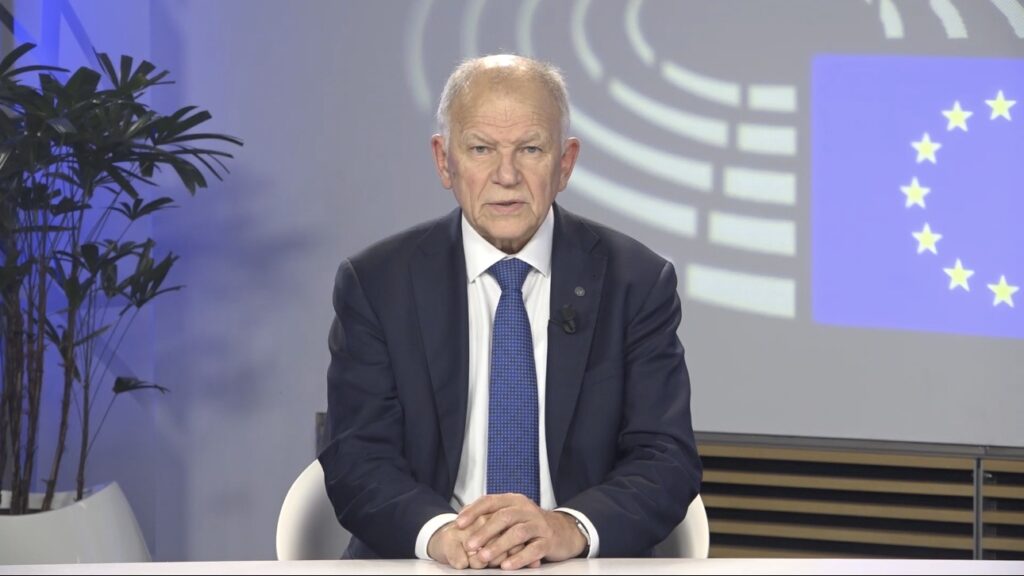
In a video message to EAPM’s Dublin conference, the MEP and rapporteur for the Biotech Act underlined the importance of translating Europe’s scientific and technological potential into tangible benefits for patients.
European biotechnology is entering a pivotal phase, with the EU seeking to strengthen its innovation ecosystem while ensuring that scientific advances translate into meaningful improvements in healthcare. The challenge is not simply to develop new technologies, but to create the conditions for them to reach patients.
This was the context of a video message from MEP Vytenis Andriukaitis, who addressed the European Alliance for Personalised Medicine’s (EAPM) conference, Innovation and Securing Patient Access to Personalised Medicine During the Irish Presidency, held in Dublin on 2 October 2026.
Although unable to attend in person, Andriukaitis contributed to the discussion on how Europe can connect scientific progress, a competitive biotechnology sector and equitable access to healthcare innovation.
From biotech innovation to patient benefit
Biotechnology is opening new possibilities across healthcare, from advanced therapies and diagnostics to more personalised approaches to disease prevention and treatment. Yet scientific progress alone does not guarantee that these innovations will become available in routine clinical practice.
Regulatory pathways, financing, clinical research capacity and the readiness of healthcare systems all influence whether promising developments can reach patients. Addressing these issues requires coordination across the innovation ecosystem, with policymakers, researchers, industry, healthcare professionals and patient organisations working towards shared objectives.
For personalised medicine, this connection is particularly important. Advances in areas such as molecular diagnostics and targeted therapies can help tailor care to individual patients, but their potential depends on the availability of appropriate testing, robust evidence, sustainable funding and clear routes into healthcare systems.
The Biotech Act and Europe’s innovation ecosystem
As a Member of the European Parliament and rapporteur for the Biotech Act in the Committee on Public Health (SANT), Andriukaitis is closely involved in discussions on the EU’s approach to biotechnology.
The Biotech Act forms part of a broader debate about how Europe can support the development and uptake of biotechnology, strengthen its competitiveness and address barriers that can slow the journey from research to application.
For EAPM, these questions are closely connected to patient access. A supportive environment for biotechnology must consider not only the conditions for developing new products, but also the systems needed to generate evidence, evaluate technologies, support their adoption and ensure that patients can benefit from them.
This includes attention to the links between research and clinical practice, the role of diagnostics in treatment decisions, and the capacity of healthcare systems to integrate new approaches into everyday care.
Keeping patients at the centre
The Dublin conference examined the practical challenges involved in securing access to personalised medicine, including the role of liquid biopsy and digital pathology, global clinical trials, and the wider policy and economic environment shaping healthcare innovation.
Across these areas, a common question remains: how can Europe move beyond promising science to ensure that innovation delivers measurable benefits for patients?
Answering it requires more than scientific excellence. It calls for effective implementation, cooperation between public and private stakeholders, and policies that recognise the realities of healthcare delivery across different countries and systems.
Andriukaitis’s video message contributed to this wider discussion at a time when Europe is considering how to reinforce its biotechnology capabilities while ensuring that innovation serves public health needs.
For EAPM, the priority is clear: Europe’s scientific potential must be matched by the policy frameworks, investment and healthcare infrastructure needed to turn innovation into accessible, effective and equitable care.